Short answer
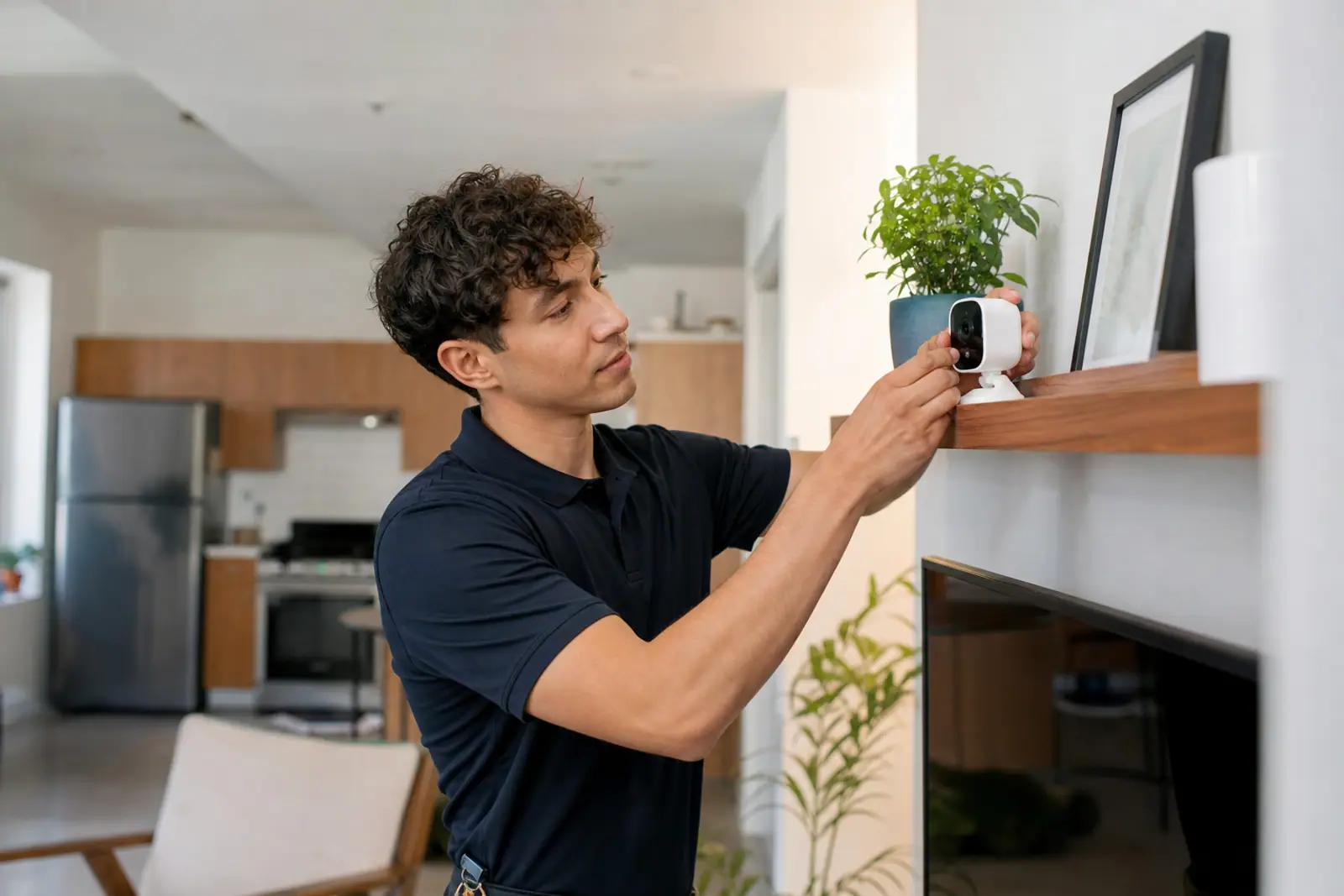
Renters usually do best with a DIY wireless system: adhesive sensors, a plug-in hub, battery or plug-in cameras, and monitoring you can cancel or move. Check your lease and talk to your landlord before installing anything that attaches to doors, frames, or shared spaces.
Why renters have different needs
Renters face three constraints homeowners don’t: you may not be allowed to drill or alter the property, you’ll probably move more often, and you share some spaces (hallways, entrances, parking) with neighbors and the landlord. The best renter setups respect all three.
What to look for
- Wireless, no-drill equipment. Adhesive door and window sensors, a hub that plugs into an outlet, and battery or plug-in cameras.
- No long contract. Month-to-month monitoring, or self-monitoring with no monthly fee, so a move doesn’t trigger an early-termination charge. See contracts and cancellation.
- Easy relocation. Equipment you own and can reinstall yourself at your next place.
- Cellular backup. Useful if building Wi-Fi is shared or unreliable.
- Smart features that don’t change the property, such as plug-in sirens, smart plugs, or a video doorbell that mounts without wiring, if your lease allows it.
Talk to your landlord first
Before you install, read your lease and ask your landlord about:
- Alterations. Adhesive mounts are usually fine, but some leases restrict anything attached to doors or frames.
- Video doorbells and outdoor cameras. These can capture shared areas or neighbors. Some buildings have rules, and some places have laws about recording audio or common areas.
- Smart locks. Changing a lock usually needs landlord approval, and they may need a key or code.
- Existing systems. Some rentals already have alarm wiring or a monitored system you could activate.
Get any approval in writing.
A simple renter setup
- Entry sensors on the front door and any ground-floor or fire-escape windows.
- A motion sensor in the main living area or hallway.
- One indoor camera pointed at the main entry, not at a neighbor’s space.
- A video doorbell if your landlord allows it, or a peephole camera alternative.
- Smoke and CO sensors only if they don’t replace the landlord’s required detectors; your landlord is usually responsible for those.
Self-monitoring or professional?
Many renters start with self-monitoring because it’s cheaper and contract-free. If you travel often or live alone, month-to-month professional monitoring can be worth adding. See is professional monitoring worth it?
Privacy and neighbors
Point cameras at your own door and space, not into neighbors’ units or windows. Avoid recording audio in shared areas unless you’ve checked local rules. Being considerate here also avoids disputes with your landlord.
Renters insurance
Some renters insurance companies offer a discount for a monitored system or certain devices. Ask your insurer what qualifies and what proof they need.
When you move
- Take photos of sensor placement so you can recreate it.
- Remove adhesive mounts carefully, following the manufacturer’s instructions, to avoid paint damage.
- Update your address with the monitoring provider so emergency responders go to the right place.
- Check whether your new city requires an alarm permit. Rules and false-alarm fees vary by location.
Common questions
Can my landlord stop me from installing a security system?
Your lease and local law determine what you can install. Adhesive, removable sensors and indoor cameras are often acceptable, while changing locks, drilling, or recording shared areas may need permission. When in doubt, ask in writing.
Will I lose my deposit?
Damage-free mounts and careful removal reduce the risk. Follow the manufacturer’s removal instructions, and test an adhesive in an inconspicuous spot first if you’re worried about paint.
Do I need professional monitoring in an apartment?
Not necessarily. Self-monitoring with door sensors and a camera may be enough in a small apartment. Professional monitoring can make sense if you travel, live alone, or want alarms answered while you’re away.
What if I move often?
Prioritize equipment you own, wireless devices that are easy to remove, and month-to-month monitoring. Before you sign up, ask how the provider handles relocations and whether there’s a fee.
Should I tell my roommates or neighbors?
It’s considerate to tell roommates and anyone who shares your entrance where cameras are and what they record. It also helps avoid misunderstandings if an alert goes off.
Next steps
- Compare no-contract and DIY options on our comparison page.
- Plan placement with where to place security cameras.
- Read DIY vs. professional installation.
This page is general education, not legal, financial, or insurance advice. Home warranty terms vary by provider, plan, and state; the contract you sign controls what is covered. Spotted an error? Request a correction.