Short answer
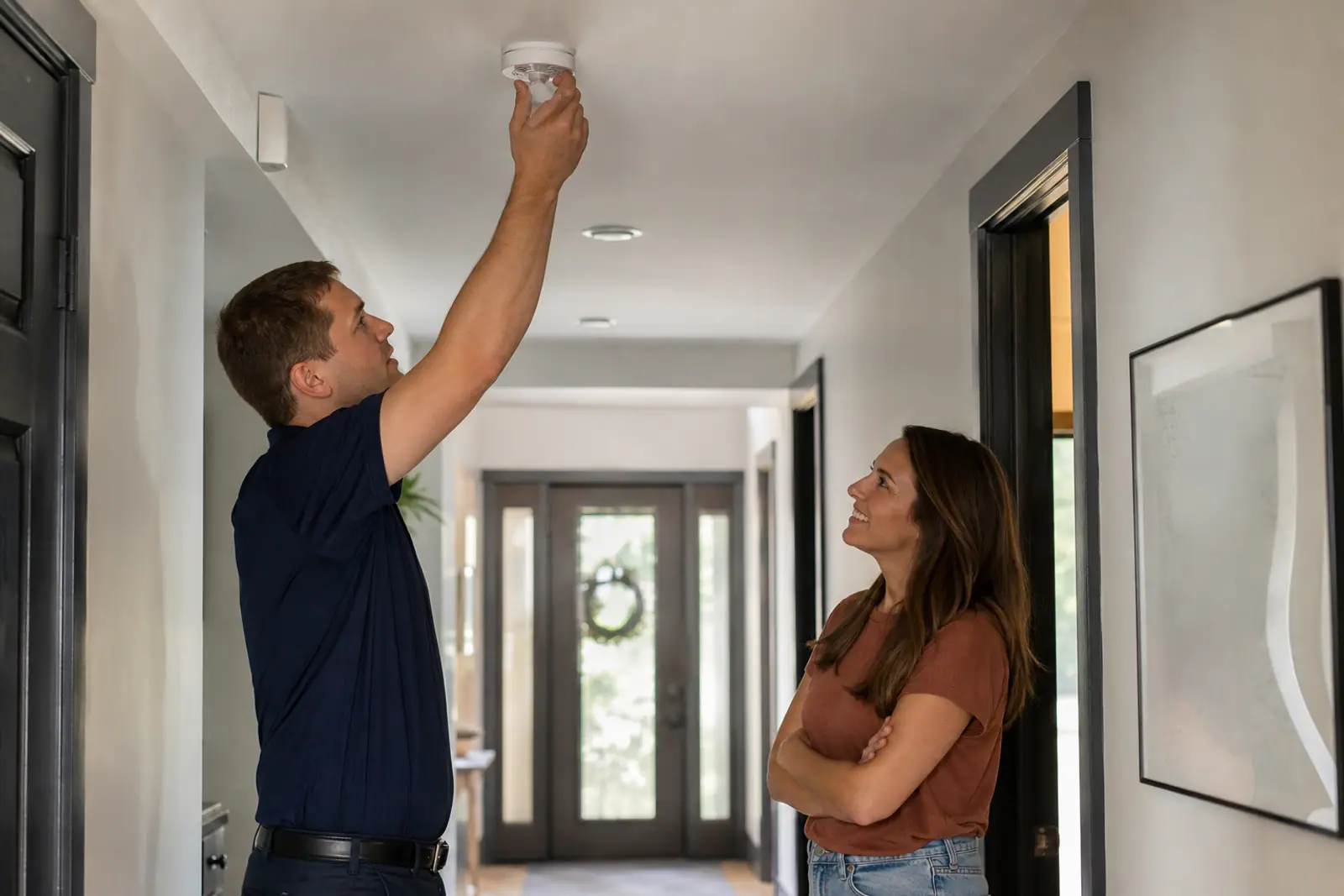
Many security systems can connect smoke and carbon monoxide (CO) detectors so an alarm alerts your phone or a monitoring center, even when no one is home. It adds a layer on top of your standard detectors; it doesn't replace the smoke and CO alarms your local code requires.
How it works
A monitored smoke or CO setup adds detectors, or a device that listens for your existing alarms, to your security system. When a detector goes off:
- Self-monitored systems send an alert to your phone.
- Professionally monitored systems send a signal to a monitoring center, which can contact you and request fire department response, depending on the plan and local rules.
The main benefit is coverage when no one is home or able to hear an alarm, such as when you’re traveling, at work, or asleep in another part of the house.
Two ways to add it
- System-compatible detectors. Smoke and CO detectors made to connect to your security hub.
- Listener devices. Some systems offer a sensor that “hears” the sound of an existing smoke or CO alarm and relays it. Check that it’s compatible with your detectors’ alarm pattern.
Ask providers which option they support and whether smoke and CO alerts are included in your monitoring plan or cost extra.
It’s a layer, not a replacement
Monitored detectors add to the smoke and CO alarms your home should already have. Local building and fire codes set requirements for where alarms must be installed, whether they must be interconnected, and whether they need to be hardwired. Check your local requirements, and if you rent, your landlord is usually responsible for required detectors.
Placement basics
Follow the detector manufacturer’s instructions and your local code. In general:
- Smoke detectors are commonly placed on every level, outside sleeping areas, and inside bedrooms.
- CO detectors are commonly placed near sleeping areas and on each level, especially in homes with fuel-burning appliances, an attached garage, or a fireplace.
- Avoid placing detectors where cooking fumes, steam, or drafts cause frequent false alarms.
Testing and maintenance
- Test detectors regularly, following the manufacturer’s schedule. Let your monitoring center know before you test, if you have professional monitoring, to avoid a dispatch.
- Replace batteries as recommended, and replace detectors when they reach the end of their stated life.
- Check the hub’s backup. Cellular and battery backup help the system send alerts during internet or power outages.
False alarms
Cooking smoke or steam can trigger smoke alarms. With professional monitoring, a false alarm may lead to a call from the monitoring center and, in some places, a fire department response. Some cities charge fees for repeated false alarms, and some require permits for monitored systems; rules vary by location, so check yours.
Is it worth adding?
Monitored smoke and CO detection may be worth it if your home is often empty, you have pets at home during the day, you have fuel-burning appliances, or you’d simply like an alarm answered when you can’t respond. If you’re rarely away and already have interconnected detectors, self-monitored alerts may be enough. See is professional monitoring worth it?
Common questions
Will the monitoring center call the fire department?
On many professionally monitored plans that include smoke and fire monitoring, the center can request fire department response when an alarm is triggered and you can’t confirm it’s false. Ask exactly how the provider handles fire and CO alarms, since procedures differ from intrusion alarms.
Do I still need regular smoke alarms?
Yes. Monitored detectors add a layer of alerting; they don’t replace the alarms required by your local code. Keep your required detectors installed, tested, and working.
What about water leaks and freezing pipes?
Many systems also offer water-leak and freeze sensors that work the same way. They can be useful near water heaters, under sinks, by washing machines, and in basements. They may also be worth asking your insurer about.
Can CO detection work without professional monitoring?
Yes. Self-monitored systems can still send CO alerts to your phone, and standalone CO alarms still sound locally. Professional monitoring adds a response when no one is available to act.
Next steps
- Compare which plans include smoke and CO monitoring on our comparison page.
- See how monitoring affects price in what home security really costs.
This page is general education, not legal, financial, or insurance advice. Home warranty terms vary by provider, plan, and state; the contract you sign controls what is covered. Spotted an error? Request a correction.