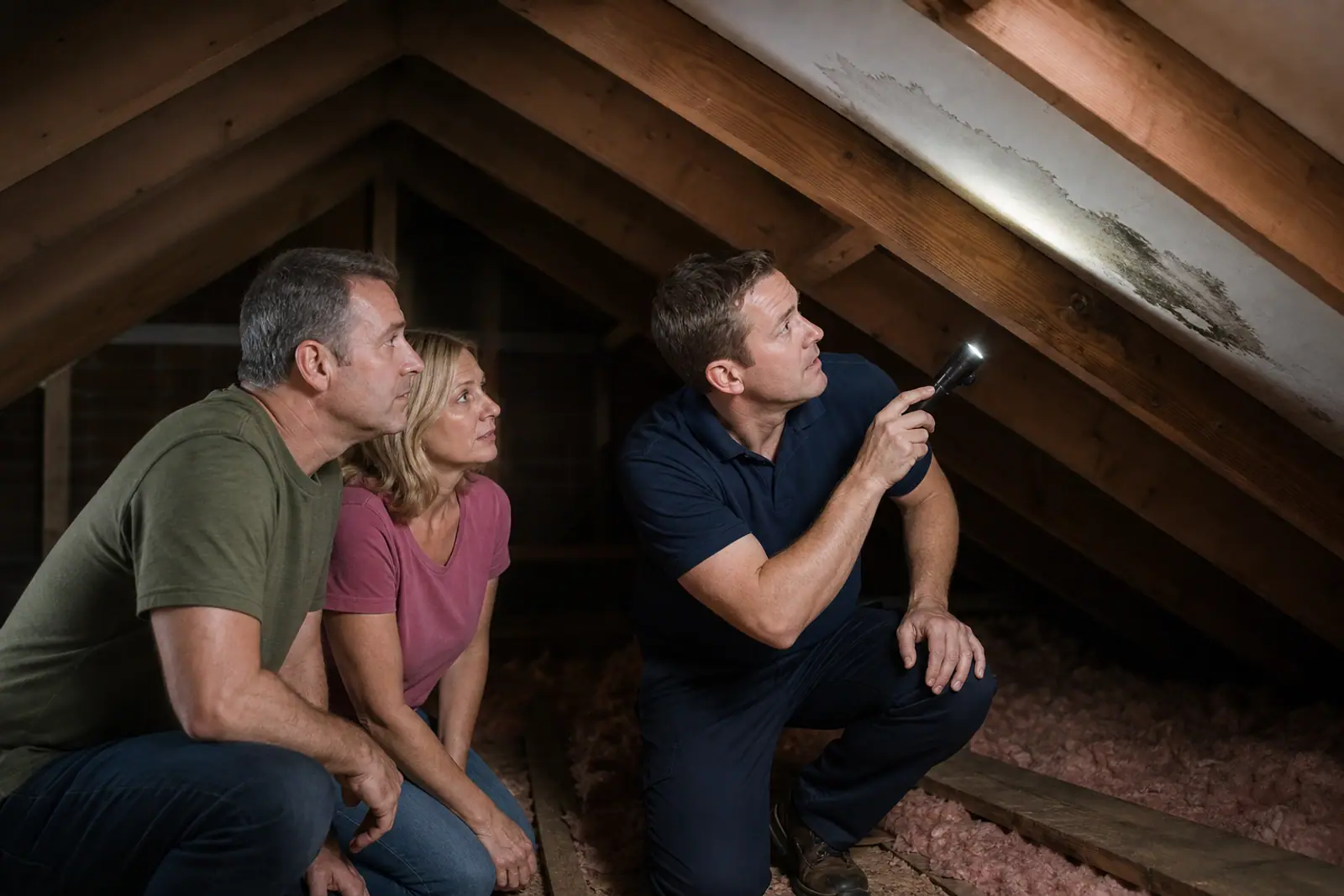
Short answer
Some home warranty plans include, or sell as an add-on, limited roof-leak repair, usually for a leak over occupied living space caused by normal wear. Many plans don't cover roofs at all, and coverage commonly excludes replacing the roof, interior water damage, and damage from storms, which is generally a homeowners insurance matter.
Roof coverage is one of the most misunderstood parts of a home warranty. People often expect a warranty to help with a leaking or aging roof, but most plans offer little or no roof coverage, and the coverage that does exist tends to be narrow.
How roof-leak coverage commonly works
When a plan does include roof coverage, often as an optional add-on, it’s typically limited to repairing a leak, not replacing the roof. Common conditions include:
- The leak is over occupied living space, not a garage, porch, patio, or other attached structure.
- The leak is caused by normal wear and tear, not a storm, falling tree, or other event.
- The roof is a covered type, since some contracts exclude certain materials or flat roofs.
- The roof was in good working order when coverage began, and has been maintained.
Coverage is usually subject to a cap, and the service fee applies to each visit. Terms vary by contract, so read the roof section, or the add-on terms, word for word.
What’s commonly excluded
Even plans with roof-leak coverage often exclude:
- Roof replacement, including partial replacement.
- Interior damage caused by the leak, such as stained ceilings, damaged insulation, drywall, or flooring.
- Storm, wind, hail, and fallen-tree damage. These are sudden events, which are usually a homeowners insurance question.
- Gutters, downspouts, skylights, chimneys, and flashing around some features, depending on the contract.
- Leaks from improper installation, prior repairs, or lack of maintenance.
- Pre-existing leaks, or damage that started before coverage began.
A home warranty isn't roof insurance
If a storm damages your roof, a home warranty generally isn't the place to start. Homeowners insurance is designed for sudden damage from covered events, subject to your policy's terms and deductible. See home warranty vs. homeowners insurance.
Home warranty vs. homeowners insurance for roofs
| Situation | Where to look first |
|---|---|
| A storm, hail, or wind damages the roof | Homeowners insurance |
| A tree falls on the roof | Homeowners insurance |
| An aging roof develops a small leak over a bedroom | Possibly a home warranty roof-leak add-on, if you have one and its conditions are met |
| The roof is near the end of its life and needs replacing | Usually your own budget; most warranties exclude replacement |
| The leak damages your ceiling and belongings | Often homeowners insurance, depending on the cause and your policy |
Every policy and contract is different, so these are starting points rather than answers.
Older roofs
If your roof is older, a home warranty is unlikely to be a substitute for planning for its repair or replacement. Many contracts exclude roofs past a certain condition, and a provider may decide a leak results from age-related deterioration or missing maintenance rather than a covered failure. For older homes, a dedicated repair fund for the roof is often the more reliable plan. See alternatives to a home warranty.
If you’re filing a roof-leak claim
- Limit further damage where it’s safe to do so, for example by placing a bucket or moving belongings.
- Photograph the leak and any damage, with dates.
- Check your contract, or the add-on terms, for roof coverage and conditions.
- If storm damage is possible, contact your homeowners insurer as well.
- Submit the service request and keep records of every conversation.
See how to file a claim for a step-by-step guide.
Questions to ask before relying on roof coverage
- Is roof-leak coverage included, or only available as an add-on? If it’s an add-on, ask what it costs and what conditions apply.
- What qualifies as a covered leak? Ask whether it must be over occupied living space, and whether certain roof materials or flat roofs are excluded.
- Is there a cap for roof repairs? Compare it with what a typical repair might cost you.
- What happens if the roof can’t be repaired? Most plans won’t pay for replacement, so ask how a non-repairable roof is handled.
- Does the plan require an inspection or proof of condition? Some providers may ask about the roof’s age or past repairs.
Maintenance that can help
Regular roof care can reduce the chance of leaks, and it can also help show that a failure wasn’t caused by neglect. Keep gutters and downspouts clear, have the roof inspected periodically and after major storms, fix small problems such as missing shingles or damaged flashing promptly, and keep receipts and photos of any work. If you buy a home, ask the seller for any roof records and the inspection report, since a contract may treat problems noted at inspection as pre-existing.
Next steps
- Check whether any plan you’re considering covers roof leaks, and whether it’s an add-on.
- Read the roof exclusions alongside your homeowners insurance policy.
- Learn how we evaluate plans for older homes.
This page is general education, not legal, financial, or insurance advice. Home warranty terms vary by provider, plan, and state; the contract you sign controls what is covered. Spotted an error? Request a correction.